

Table of Contents
- Why Spotting Counterfeit Clothing Matters
- Common Signs of Counterfeit Clothing to Watch For
- How to Verify Designer Clothing Authenticity
- Checking Spelling, Font Consistency and Print Quality
- Consumer Rights and Counterfeit Goods Protection
- Vetting Sellers and Assessing Return Policies
- How to Spot Fake Branded Clothing Online and In-Store
- Frequently Asked Questions
Last Updated: September 18, 2026
Why Spotting Counterfeit Clothing Matters
Counterfeit branded clothing floods online marketplaces and street markets, costing consumers billions annually. As manufacturing techniques improve, fakes become harder to detect.
Buying counterfeits carries real risks: products fall apart quickly, materials are inferior, stitching fails, and colours fade.
Counterfeit purchases fund criminal networks that exploit workers and use child labour. Learning to spot fake branded clothing protects you and helps stop these operations.
At Value Shoe Box, we understand the frustration of finding counterfeits online. This guide covers the practical techniques to verify what you're buying, whether shopping secondhand or new.
Common Signs of Counterfeit Clothing to Watch For
Counterfeiters cut corners to maximize profit, leaving traces. Learning where to look transforms you into a sharp buyer.
While obvious fakes fail basic quality checks, sophisticated counterfeits require closer inspection. Know what genuine quality looks like.
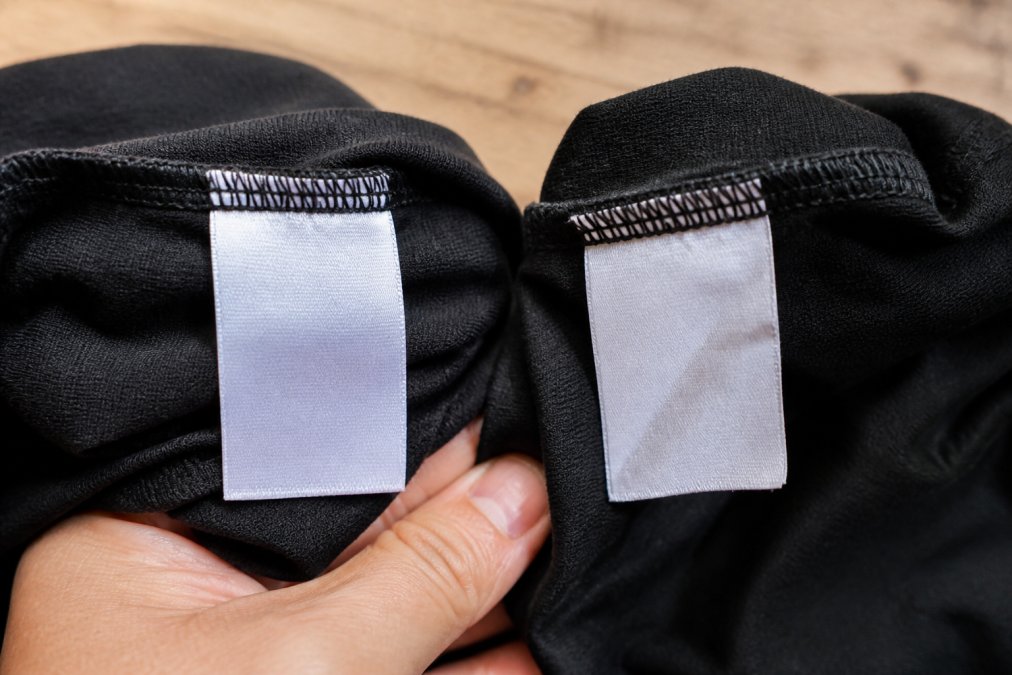
Stitching and Seam Quality
Genuine branded clothing has perfect stitching: thread runs in straight lines, seams are tight and even, and loose threads are absent.
Counterfeit stitching is visibly sloppy: thread tension varies, seams wander, loose threads hang from seams, and stitching patterns skip or double back.
Check these specific areas:
- Collar seams
- Armpit seams
- Hem lines
- Pocket edges
- Zipper attachment points
Run your finger along seams. Genuine seams feel smooth. Fake seams feel bumpy or irregular. Loose threads catch on your fingernail.
Labels, Tags and Swing Tags
Brands invest in label quality; counterfeiters often get labels wrong because they cost money to produce correctly.
Genuine labels have crisp, sharp text, vibrant colours, flat placement against fabric, and perfectly aligned stitching.
Fake labels have blurry text, washed-out colours, glued rather than stitched attachment, and crooked or uneven stitching.
Check the swing tag: genuine tags use quality card stock with sharp printing and secure attachment; counterfeits use thin, flimsy card with fuzzy printing and loose or poorly glued attachment.
Logo Precision and Embroidery
Genuine logos are embroidered with precision: every stitch is deliberate and the design is perfectly proportioned.
Embroidered logos on genuine items have:
- Consistent thread tension
- Clean, defined edges
- Proper stitch density (no gaps)
- Correct proportions and spacing
Counterfeit embroidery shows:
- Loose or tight thread tension
- Fuzzy, blurred edges
- Thin areas where thread is sparse
- Distorted proportions
- Misaligned design elements
Check the back of embroidered logos: genuine embroidery has neat thread work; fake embroidery has messy, tangled threads or loose knots.
Material Quality and Hardware
Genuine branded clothing uses quality materials that feel substantial with weight and drape; seams don't pucker.
Counterfeit fabric feels thin and cheap with a plastic sheen, loose weave, and puckered or bunching seams.
Genuine branded items use quality hardware: zippers glide smoothly, buttons sit flush, and metal engravings are crisp.
Fake hardware is cheap. Zippers stick or jam. Buttons are loose. Metal engravings are blurry or shallow.
| Genuine Indicator | Counterfeit Indicator |
|---|---|
| Smooth, gliding zipper | Zipper sticks or catches |
| Solid, well-attached buttons | Loose or poorly sewn buttons |
| Sharp metal engravings | Blurry or shallow engravings |
| Quality metal components | Lightweight, thin metal |
| Substantial fabric weight | Thin, flimsy fabric |
| Even seam tension | Puckered or bunching seams |
How to Verify Designer Clothing Authenticity
Modern verification goes beyond visual inspection. Brands embed digital security features and tracking systems; understanding how these work helps you distinguish genuine items from counterfeits.
Digital IDs, QR Codes and NFC Chips
Many luxury and premium brands use digital verification systems: scan a QR code or tap an NFC chip embedded in the garment to verify authenticity against the brand's database.
Each garment receives a unique digital ID during manufacturing, encoded in a QR code, NFC chip, or holographic label. Scanning verifies authenticity instantly and may track production date, factory location, and supply chain movement.
If the code doesn't work: counterfeiters print fake QR codes linking to fraudulent pages. Use the official brand app, not a generic scanner. If the code leads to a third-party site (not the brand's domain), it's likely counterfeit. Contact the brand's customer service for investigation.
Not all genuine items have digital verification yet. Older stock, outlet items, and some heritage brands don't use these systems. Absence of a digital ID doesn't prove a garment is fake.
Serial Numbers and Engraving Details
Genuine branded items often have serial numbers or batch codes that identify the garment, production run, and sometimes the factory. They're engraved, printed, or woven with precision.
Serial numbers are typically found inside the care label, on authenticity tags or holograms, engraved on metal hardware, woven into fabric, or printed on hang tags.
Genuine serial numbers are crisp, clearly legible, and evenly spaced. Counterfeit numbers are blurry, unevenly spaced, poorly aligned, or inconsistently sized. Font should match the brand's standard across all labels.
Each brand uses specific numbering systems. Research the brand's format before buying, some use 6-8 digit codes, others use alphanumeric combinations, and luxury brands often include country-of-origin codes. If the number doesn't follow the brand's known pattern, it's a red flag.
Contact the brand's customer service with a photo of the serial number. Many brands will confirm whether a number is registered in their system, one of the most reliable verification methods available.
Weight, Feel and Construction Inspection
Pick up the garment. Genuine branded clothing has weight and density, feels solid, and has sturdy, intentional construction.
Counterfeit items feel light, flimsy, cheap, and fragile.
Pinch the fabric for 5 seconds and release: quality fabric recovers quickly; cheap fabric wrinkles and stays wrinkled. Counterfeits sag or lose shape when hung.
Flip the garment inside out. Genuine items have reinforced seams, properly finished hems, smooth attached lining, trimmed excess thread, and properly applied interfacing.
Counterfeits have unfinished or single-stitched seams, raw or poorly folded hems, loose or bunching lining, loose threads, and missing or poorly applied interfacing.
Handle the same item from an official brand store to feel the weight, drape, and seam quality, this tactile memory becomes your benchmark for spotting fakes.
Checking Spelling, Font Consistency and Print Quality
Counterfeiters make spelling mistakes. They use wrong fonts. Print quality varies across the garment.
Consumer Rights and Counterfeit Goods Protection
In the UK, selling counterfeit goods is illegal under the Trade Marks Act.
Vetting Sellers and Assessing Return Policies
Seller reputation and sourcing practices matter as much as the product. Trustworthy sellers operate transparently; counterfeit operations rely on anonymity and restrictive policies.
Assessing Seller Credibility and History
Check seller ratings and reviews: look for authenticity concerns and quality complaints; assess how sellers respond to negative feedback; verify account age and product consistency; weight recent reviews (last 3 months) more heavily; and watch for sudden spikes in sales indicating market flooding.
Red Flags in Seller Behaviour
Certain seller practices are strong indicators of counterfeit operations:
Pricing red flags: items 40-70% below retail without justification, "overstock clearance" claims for current items, wildly different prices across platforms, and bulk discounts designed to move volume quickly.
Return Policy and Refund Terms
Generous return policies indicate seller confidence in authenticity. Restrictive policies often hide counterfeits.
Verifying Seller Sourcing Claims
Ask sellers: Where did you source this? Can you provide authenticity proof? Is it new, deadstock, or vintage? What is the production date? Can you provide close-ups of serial numbers, labels, and tags? Vague answers or refusals are red flags.
Requesting Detailed Product Photography
Request close-ups of labels and tags, serial numbers, logos and embroidery, seam stitching, hardware, interior construction, and fabric texture.
Cross-Checking Against Official Brand Information
Verify the item against the brand's official sources: search the brand's website, compare photos, check official retail price, look up product codes, and review care instructions and materials.
How to Spot Fake Branded Clothing Online and In-Store
Online shopping demands extra caution: you can't touch fabric or inspect seams closely, so rely on photographs and seller information.
Frequently Asked Questions
What are the most common signs of counterfeit clothing?
The most obvious indicators include poor stitching with uneven thread tension, misspelled brand names or logos on labels, and cheap materials or hardware. Counterfeit items often feel lighter or flimsy compared to genuine products. Check swing tags for faded printing, inconsistent fonts, and spelling errors. Genuine branded clothing has clean lines, precise embroidery, and consistent embossing on metal engravings. If the price seems unusually low for a luxury brand, inspect the item more carefully for these telltale signs.
How can I verify designer clothing authenticity using digital tools?
Many premium brands now include digital IDs, QR codes, or serial numbers on their products. Scan the QR code with your smartphone to access the brand's verification system, which typically displays production details and confirms the item's legitimacy. Check the serial number against the brand's official database if available. Some luxury goods use blockchain-based authentication. For second-hand or vintage pieces, research the specific production year and style code to confirm it matches authentic examples from that period. Always verify through the brand's official website or app, not third-party sites.
What consumer rights do I have if I purchase counterfeit goods?
Under the Consumer Rights Act 2015, you have the right to reject goods that are not as described or are not of satisfactory quality. If you discover an item is counterfeit after purchase, you can request a full refund, replacement, or repair from the seller. Report counterfeit goods to Trading Standards, which investigates breaches of consumer protection law. If purchased online, check the seller's return policy before buying. Keep all receipts and documentation. For items from unauthorised resellers, contact the brand directly to report the counterfeit sale, as many luxury brands actively combat fake goods in the resale market.
How can macro-photography help me spot fake branded clothing when buying online?
Request high-resolution, close-up photos of key areas before purchasing from online sellers: the label stitching, logo embroidery, swing tag printing, and hardware engravings. Use your phone's macro mode to inspect these details carefully. Look for fuzzy or blurry embroidery, uneven stitching gaps, and inconsistent thread colours in genuine items. Check if the font on labels matches the brand's official style. Ask sellers for photos of the item's weight and feel by comparing it to a known genuine product. Reputable sellers provide multiple detailed angles; reluctance to show close-ups is a red flag.